The Cross and Resurrection of Jesus Christ are the central claim of Christianity. Every word of the Bible serves, in some way, as background to these two events. Yet most people — believer and sceptic alike — carry only a vague understanding of what actually happened and why it matters.
This matters, because the most common objections to Christianity rest on a misunderstanding of what Christianity actually claims. The Gospel is not a story about God lowering his standards. It is a story about a debt being paid — completely, legally, at enormous cost — by someone qualified to pay it.
01 Every Religion Agrees: Humanity Has a Problem
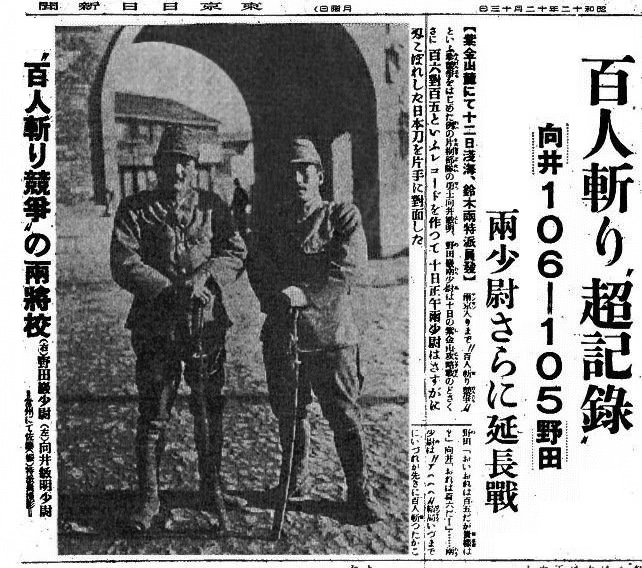
The capacity for organised human evil is not a medieval superstition. The 20th century documented it in photographs. The question is not whether the problem exists, but what its source is.
Whatever their differences on every other question, the world's major religious and philosophical traditions agree on one thing: humanity as it actually exists falls short of humanity as it ought to be. We consistently fail our own stated standards, let alone any divine one.
This failure is not merely ignorance that education can cure, or primitive instinct that civilisation can refine. The 20th century — the most literate, scientifically advanced, institutionally organised century in human history — was also the most murderous. The Nanjing Massacre, the Holocaust, the Gulag, the Killing Fields. Not the failures of uneducated savages, but of educated, modern, ideologically motivated human beings.
The problem, as the Bible frames it, is not external. It is the human heart itself.
| Tradition | The Problem | The Proposed Solution |
|---|---|---|
| Buddhism | Harmful actions accumulate as karma, binding one to cycles of rebirth | Reach enlightenment through the Eightfold Path; dissolve the self into Nirvana |
| Hinduism | Actions in this life determine the next rebirth; caste governs duty | Fulfil one's dharma faithfully across lifetimes to achieve moksha (liberation) |
| Islam | Good and evil deeds are weighed on a divine scale at judgment | Outweigh bad deeds with good ones through the Five Pillars; martyrdom can guarantee entry |
| Secular ethics | Actions harm others and produce social dysfunction | Education, institutional reform, therapy, social progress |
| Christianity | All have sinned and fall infinitely short of God's perfect standard | The debt cannot be self-paid; it must be paid by someone qualified to pay it |
The critical difference is in the fourth column. Every tradition except Christianity assumes the solution lies within the human being. Discipline yourself sufficiently, accumulate sufficient merit, improve your social systems enough — and the problem is soluble. Christianity alone says: no amount of internal effort can solve a problem this deep.
02 Does the Merit System Actually Make Sense?
Before examining what Christianity proposes, it is worth asking whether merit-based alternatives are logically coherent — not just spiritually, but in terms of ordinary justice.
A surgeon saves 500 lives over a distinguished career. He then drives drunk one night and kills a pedestrian. Does the court dismiss the charges because of the lives he saved? In every legal system on earth, the answer is no. Prior good deeds do not retroactively erase crimes.
This is not a quirk of human law — it reflects a deep moral intuition about justice. Debts are not cancelled by credit. They require payment. And the debt of sin, if it is real, requires payment whether or not the debtor has done impressive things in the meantime.
James states this principle with unusual legal sharpness:
"For whoever keeps the whole law and yet stumbles at just one point is guilty of breaking all of it. For he who said, 'Do not commit adultery,' also said, 'Do not murder.' If you do not commit adultery but do commit murder, you have become a lawbreaker."
— James 2:10–11
The law is a unified system. Violating any part of it makes you a violator of the system. The question is not "how many laws did you break?" but "did you break any?" By this standard — which is the standard already accepted in human courts worldwide — every person who has ever lived stands guilty.
Christianity does not consider this pessimism. It considers it accuracy. And accuracy about the problem is the necessary first step toward an actual solution.
03 Christianity's Diagnosis: The Debt You Cannot Pay
Here is where Christianity makes its most radical claim, and the one most misunderstood by critics.
"There is no one righteous, not even one; there is no one who understands; there is no one who seeks God. All have turned away, they have together become worthless; there is no one who does good, not even one."
"Therefore no one will be declared righteous in God's sight by the works of the law; rather, through the law we become conscious of our sin."
Note the function of the law in the second passage. It does not exist as a ladder to climb. It exists as a mirror — to show us accurately what we are. Its purpose is diagnostic, not prescriptive. The law reveals the disease; it does not cure it.
The disease is this: every person carries a debt — the accumulated legal consequence of sin before a perfectly holy God — that they are constitutionally incapable of paying. The "wages of sin is death" (Romans 6:23): not merely physical death, but permanent separation from God. Left to themselves, every human being faces this outcome.
1. Every person has sinned. 2. Sin incurs a debt — a legal penalty that must be served or paid. 3. No human being can pay this debt through their own effort. 4. Without outside intervention, every person faces the full penalty.
This is not a comfortable position. Christianity does not pretend it is. But it is the honest starting point — and it makes the solution, when it comes, all the more remarkable.
04 The Ransom: What Jesus Came to Do
The Cross was not incidental to Jesus' mission. He described it as the purpose he came for.
Jesus stated his purpose with precision, and chose his words carefully:
"Even the Son of Man came not to be served but to serve, and to give his life as a ransom for many."
— Matthew 20:28
The Greek word is lytron — a technical legal term for the price paid to discharge a debt or liberate a prisoner. Jesus is not speaking in metaphor. He is describing a transaction.
The Analogy Worth Working Through
A man carelessly drops a cigarette in a building lobby. The fire that results destroys the entire building — $10 million in damages. He is legally liable for the full amount. But he has nothing. He cannot pay. The law does not suspend its claims because of incapacity; he goes to prison.
Then a wealthy benefactor steps forward. He pays the full $10 million on the man's behalf. The debt is discharged. The court is satisfied. The man walks free.
But here is the crucial detail: the benefactor has to deposit the payment into the liable party's account. The man must provide his account details — he must, in other words, receive the gift. If he refuses — if he insists on paying his own way, or doubts that the benefactor is genuine, or simply declines — the debt remains unpaid and he returns to prison. Not because anyone is being cruel, but because an unpaid debt remains an unpaid debt regardless of what was offered.
This is the structure of the Gospel. Every person owes a debt they cannot pay. Jesus — sinless, therefore not subject to death's claim on his own account — stepped in and paid it. The Cross was not a tragedy. It was a transaction. But the payment only takes effect when received.
05 The Cross: More Than Physical Suffering
Roman crucifixion was, by design, one of the most brutal methods of execution ever practised — prolonged, maximally humiliating, and exquisitely painful. But there is strong reason to think the physical agony was not the deepest dimension of what Jesus endured.
Consider his prayer in Gethsemane. He asked that "this cup" be taken from him (Matthew 26:39), and his distress was so severe that Luke records he sweat "like drops of blood" (Luke 22:44). This is a man who had already demonstrated complete physical indifference to danger — who calmly walked through crowds that sought to stone him, who announced his own death repeatedly without apparent anxiety. The prospect of nails and a Roman cross does not explain the agony in the garden.
"My God, my God, why have you forsaken me?"
— Matthew 27:46 / Psalm 22:1The "cup" was something far worse than physical pain. It was the complete rupture of his eternal relationship with God the Father — a relationship that had existed before time began. For the eternal Son of God to become, as Paul writes, "sin for us" (2 Corinthians 5:21) — to take upon himself the accumulated moral weight of every human transgression — and to experience the full divine response to that sin, was the true horror of Golgotha.
His cry — "My God, my God, why have you forsaken me?" — is not the cry of a man losing faith. It is a quotation of Psalm 22, a messianic psalm that begins in desolation and ends in vindication and global worship. It is the cry of someone experiencing, fully and consciously, the divine abandonment that sin deserves — so that those who receive his payment will never experience it themselves.
06 Isaiah 53: Written 700 Years in Advance

The Great Isaiah Scroll (1QIsaa), Qumran Cave 1. Dated c. 125 BCE — over a century before Jesus was born. Israel Museum, Jerusalem. Public domain.
One of the most remarkable features of the Cross is that it was anticipated, in precise detail, centuries before it occurred.
Isaiah 53 was written approximately 700 BCE. When the Dead Sea Scrolls were discovered in 1947, a complete copy of Isaiah was found — the Great Isaiah Scroll — dated by radiocarbon dating and paleographic analysis to approximately 125 BCE. More than a century before Jesus was born. The text of Isaiah 53 in that scroll is essentially identical to the later Masoretic text used in modern translations. There is no ambiguity about its pre-existence.
"Surely he hath borne our griefs, and carried our sorrows… he was wounded for our transgressions, he was bruised for our iniquities: the chastisement of our peace was upon him; and with his stripes we are healed. All we like sheep have gone astray; we have turned every one to his own way; and the LORD hath laid on him the iniquity of us all."
The passage describes with precision: (1) a figure who bears the suffering of others rather than his own, (2) wounded and crushed specifically for their transgressions, (3) a legal "chastisement" that produces peace for others, and (4) the iniquity of the many "laid on him" by God himself. This is substitutionary atonement, described 700 years before it happened.
The Ashkenazi Jewish tradition, notably, removed Isaiah 53 from the synagogue reading cycle (the Haftarah) — an unusual step that itself suggests the passage was considered too directly applicable to Jesus to be comfortable. The Sephardic tradition retained it. When the Dead Sea Scrolls surfaced, Isaiah 53 was there in full, undeniably pre-Christian, undeniably specific.
07 The Torn Veil: One Last Detail
Just before Jesus died, he cried "It is finished!" (John 19:30). The Greek is tetelestai — a single word used in first-century commerce to mean "paid in full." It was stamped on receipts and debt certificates when an account was settled.
At that same moment, the curtain in the Jerusalem Temple was torn in two, from top to bottom (Matthew 27:51).
This curtain — the veil of the Temple — separated the Holy of Holies from the rest of the Temple. The Holy of Holies was the earthly dwelling place of God's manifest presence. Only the High Priest could pass beyond it, and only once a year, on Yom Kippur, and only carrying the blood of sacrifice. Josephus, the first-century Jewish historian, records that the veil was made of seventy-two plaits of twenty-four threads each, 60 feet long and 30 feet wide. Human hands could not tear it from the top.
The direction matters: top to bottom. This was not vandalism. It was God's own act, tearing from the top down, removing the barrier between his presence and humanity — a barrier that had existed because sin had made access impossible. The moment the debt was paid, the barrier was removed. For the first time in history, the way into God's presence was open to everyone, not just the high priest, not just once a year, not only through animal sacrifice — but freely, to all, through the completed work of Christ.
08 The Resurrection: Legal Proof of Payment

The Resurrection is not a postscript to the Gospel. It is the legal verdict that the payment was accepted.
The Cross alone would be insufficient. Anyone can die claiming to save others. The question that matters is whether it worked — whether the payment was accepted and the debt discharged. Paul addresses this with unusual directness:
"If Christ has not been raised, your faith is futile; you are still in your sins. Then those also who have fallen asleep in Christ are lost. If only for this life we have hope in Christ, we are of all people most to be pitied."
Paul's logic is airtight. If Jesus remained in the tomb, it means death still had a valid legal claim on him — which means the debt was not fully paid — which means everyone who trusted in that payment is still carrying their own debt. Paul stakes everything on the physical, historical reality of the Resurrection. A "spiritual" or metaphorical resurrection does not discharge a legal debt. The debt was real; the proof of payment must be equally real.
Why the Physical Resurrection Is Non-Negotiable
Some modern thinkers try to retain the "significance" of the Resurrection while denying its physicality — suggesting that what "rose" was Jesus' influence, or the disciples' faith, or some spiritual reality. But this dissolves Paul's argument entirely. A spiritual survival does not validate a legal payment. The Resurrection must be the same kind of event as the death — physical, verifiable, falsifiable.
The historical evidence for the physical Resurrection — the empty tomb, the post-Resurrection appearances to over 500 witnesses (1 Corinthians 15:6), the transformation of the disciples from frightened fugitives to fearless martyrs, the conversion of Paul, the failure of the authorities to produce a body — is examined in detail in a companion article.
09 How to Receive What Has Been Done

The way to God is open. The only remaining question is whether to walk through it.
The transaction is complete. But it must be received. This resolves the apparent unfairness of the Gospel: the convicted murderer who turns to Christ in faith is not "getting away with it." The debt has been paid — fully, at enormous cost. The moral person who rejects Christ is not being punished for being virtuous; they are simply declining to accept a payment that covers a real debt they owe.
"I have been crucified with Christ: nevertheless I live; yet not I, but Christ liveth in me: and the life which I now live in the flesh I live by the faith of the Son of God, who loved me, and gave himself for me."
— Galatians 2:20
What does it mean to be "crucified with Christ"?
Acknowledge That the Sentence Was Yours
The debt Jesus paid was your debt. The punishment he received was your punishment. To be "crucified with Christ" is to own this without qualification — to say: "the sentence that fell on him belonged to me." This is repentance: not primarily an emotion, but a recognition of legal reality. Without it, the payment remains unclaimed.
Acknowledge That Jesus Is Lord
He purchased your life with his own. That carries an implication about ownership. Confessing "Jesus is Lord" (Romans 10:9) is not a statement of admiration. It is a statement of allegiance — a recognition that you are no longer the rightful sovereign of your own life. He is.
When these two realities are received, something legally definitive happens. The righteousness of Jesus — his perfect, unbroken obedience at every point where we failed — is transferred to the believer's account. Theologians call this imputation. Not moral improvement (that is a consequence, not the basis). An immediate, irreversible, forensic declaration: not guilty.
The believer does not stand before God on the basis of their own record. They stand on the basis of Christ's record, legally transferred to them by grace through faith. The debt is not ignored — it is paid. That distinction is everything.
The Thread That Runs Through History
~700 BCE
Isaiah writes Isaiah 53 — describing a suffering servant who bears the iniquities of many, is wounded for their transgressions, and is vindicated after his death. No reader in Isaiah's time could plausibly identify a historical referent.
~125 BCE
The Great Isaiah Scroll is copied and stored at Qumran. Radiocarbon dating and paleographic analysis confirm its date. The text of Isaiah 53 is essentially identical to modern translations — and demonstrably predates Jesus by over a century.
~30 CE — The Cross
Jesus is crucified under Pontius Pilate. He cries tetelestai — "paid in full." The Temple veil is torn from top to bottom. The way into God's presence is opened.
~30 CE — Three Days Later
Jesus rises physically from the dead. Over the following weeks he appears to multiple individuals and groups — including, Paul records, more than 500 people at once, most of whom were still alive when he wrote (c. 55 CE). Death's legal claim is annulled.
~55 CE
Paul writes 1 Corinthians, including the earliest written account of the Resurrection appearances — within 25 years of the events, with living eyewitnesses still available to be questioned. The historical case stands on evidence, not tradition.
A Legal Reality That Changes Everything
The Cross and Resurrection are not a moral story designed to inspire you. They are a legal event that permanently changes your standing before God — if you receive what has been done. The debt is real. The payment is real. The only remaining question is what you will do with it.
If you want to examine the historical evidence for the Resurrection in detail — the empty tomb, the eyewitness accounts, and the facts accepted even by sceptical historians — that evidence is stronger than most people realise.
6 Historical Facts That Prove the Resurrection →