There are approximately 1080 atoms in the observable universe. Roger Penrose's calculation of the probability that the universe began in its observed state by chance yields a number so much larger than that — 1 in 1010123 — that writing out the zeros would require more space than the observable universe contains. And that's just one constant.
This is what physicists call the fine-tuning problem. Not a problem in the sense of an anomaly — but a problem in the sense of a discovery so startling that it has reshaped the philosophy of science, divided cosmologists, and prompted some of the twentieth century's most rigorous skeptics to revisit their most fundamental assumptions.
This article walks through the actual numbers, the scientists who discovered them, and the three explanations that remain on the table. Only one holds up.
First: Understanding the Scale
Before examining the constants themselves, it's worth pausing on what numbers like 10120 actually mean. Our intuitions, evolved for counting animals and tracking seasons, weren't built for this.
Crucially: 1020 is not half of 1040. It is one part in 1020 of it — one grain of sand compared to all the Earth's sand. The jump from 1080 to 10120 is a factor of 1040 — a number larger than the total count of atoms in the universe. When we say something is fine-tuned to 1 in 10120, we are speaking of precision that has no analogy in everyday human experience.
With that scale in mind, consider the grain of sand thought experiment. Suppose someone writes their name on a single grain of sand and hides it among the estimated 1020 grains on Earth. A kidnapper holds your closest friend hostage: find the grain, or they die. You logically know this is impossible. A probability of 1 in 1020 is already, in any reasonable sense, zero.
Now multiply that impossibility by 10100. That is the level of precision we are discussing when we speak of the cosmological constant.
The Constants: What Must Be True for Life to Exist
What follows are seven of the most significant fine-tuned parameters identified by physicists. These are not theological claims — they are peer-reviewed findings from mainstream physics.
Dark energy — the force driving the universe's accelerating expansion — has a value that must be almost exactly zero, but not quite. Quantum field theory predicts a value 10120 times larger than what we actually observe. This discrepancy is the largest unexplained gap in all of physics.
If the cosmological constant were even fractionally larger than observed, the universe would have expanded too rapidly for any matter to clump together — no galaxies, no stars, no planets. Fractionally smaller (into negative territory), and gravity would have overcome expansion, collapsing the cosmos back in on itself within moments of the Big Bang.
Nobel laureate Steven Weinberg: described this discovery as "disturbing," and stated that if the value differed even slightly, no beings capable of observing it would exist. Theoretical physicist Leonard Susskind has noted that this single number alone is sufficient to make chance an implausible explanation.
The universe began with a specific density of matter. If that density had been greater by even 1 part in 1060, gravitational collapse would have crushed everything within seconds of the Big Bang. If it had been lower by the same fraction, matter would have dispersed too rapidly — no stars, no chemistry, no life.
Philosopher Robin Collins offers a vivid analogy: imagine stretching a ruler across the entire observable universe. Fine-tuning at 1 in 1060 corresponds to hitting a target the width of a single atom — from the other side of the universe — at random. Once.
Gravity is also fine-tuned relative to electromagnetism. The ratio between the electromagnetic force and gravitational force between two protons is approximately 1036. If gravity were even slightly stronger relative to electromagnetism, stars would burn out too quickly for planets to develop life; if weaker, stars could not ignite at all.
The strong nuclear force holds protons and neutrons together inside atomic nuclei. If it were just 2% stronger, two protons would bind directly to form a "diproton" — and all the hydrogen in the early universe would have immediately fused into helium. The result: no hydrogen-burning stars like our Sun (which last billions of years), no water, and no organic chemistry.
If the strong force were about 50% weaker, all elements heavier than hydrogen would become unstable. No carbon, no oxygen, no nitrogen — the entire periodic table collapses to a single element.
Most remarkably, in 1953, astronomer Fred Hoyle predicted — based purely on the existence of carbon-based life — that carbon-12 must have a nuclear resonance at almost exactly 7.656 MeV. Physicists thought he was wrong. They tested it. He was right to within 1%. A shift of just 4% in the strong force would eliminate carbon from the universe.
This is called the Hoyle State — one of the most striking examples in science of a prediction derived from the anthropic assumption that life exists, which was then experimentally confirmed.
The weak nuclear force governs radioactive decay and drives certain nuclear reactions in stars. It plays a critical role in supernovae — the stellar explosions that scatter heavier elements (carbon, oxygen, iron) across galaxies, seeding future planetary systems with the building blocks of life.
If the weak force were appreciably stronger, the Big Bang's nuclear burning would have proceeded past helium all the way to iron — leaving no hydrogen, and making long-lived stars impossible. If it were much weaker, supernovae could not expel their outer layers, and those heavy elements would remain locked inside stellar cores forever.
Astronomer Royal Sir Martin Rees estimated that a change of roughly 1 part in 10,000 in the relative strength of the weak force would prevent supernovae from distributing the heavy elements essential for rocky planets and life.
When the universe began, it produced matter and antimatter in nearly equal quantities. When matter and antimatter meet, they annihilate each other into pure energy. If the production had been perfectly equal, every particle would have met its antiparticle — and the universe would contain nothing but light.
For every billion particles of antimatter produced, there were a billion and one particles of matter. That surplus of one part in a billion is the reason everything in the universe exists — every star, every planet, every atom in your body. A slightly smaller excess, and existence would be impossible.
The electromagnetic force determines how atoms bond with each other — it is literally the force that makes chemistry possible. If it were significantly stronger, electrons would be held so tightly to nuclei that no chemical reactions could occur. If significantly weaker, atoms could not hold electrons in stable orbits.
The electromagnetic force must also be precisely calibrated relative to the strong nuclear force. The ratio between them determines how many stable elements the periodic table contains — and which of those elements can support biochemistry. Carbon, with its unique ability to form four bonds simultaneously, is the architectural foundation of all known life. Its existence depends on this ratio being very close to what it is.
The second law of thermodynamics tells us that disorder (entropy) increases over time. This means the universe must have begun in an extraordinarily ordered, low-entropy state — otherwise the thermodynamic arrow of time (the direction from past to future) could not exist.
Physicist Roger Penrose calculated the probability that the universe began in its observed low-entropy state purely by chance. His answer: 1 in 1010123. This number is so incomprehensibly large that no analogy can capture it. Writing out the zeros alone would require more space than the entire observable universe. The number of atoms in the universe, 1080, is not even a rounding error by comparison.
Penrose's conclusion: The special initial conditions of the universe cannot be explained by any known physical process. They represent, in his words, an extraordinary degree of "specialness" that demands explanation.
Fine-tuning is not the argument that one of these constants happens to be right. It is the observation that every single one of them must be right — simultaneously — and that changing any one would make life impossible. The odds of all of them aligning by chance are not merely improbable. They are, by any rational standard, impossible.
What Scientists Say
The reality of fine-tuning is not a theological claim — it is a scientific observation that virtually no serious physicist disputes. The disagreement is over what it means, not whether it exists.

Amazing fine-tuning occurs in the laws that make this possible. Realizing the complexity of the events that have happened, it is hard not to use the word 'miracle.'

How surprising it is that the laws of nature and the initial conditions of the universe should allow for the existence of beings who could observe it. If any one of several physical constants had even slightly different values, life would not have emerged.
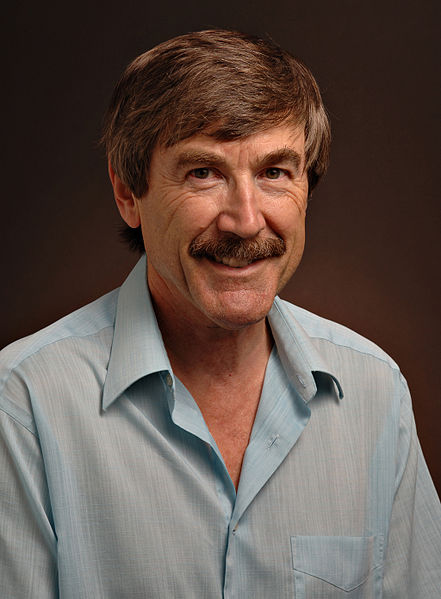
The really amazing thing is not that life on Earth is balanced on a knife-edge, but that the entire universe is balanced on a knife-edge. Even if you dismiss man as a chance accident, the fact remains that the universe is fit for habitation in a way that is self-evidently not 'reasonable.'
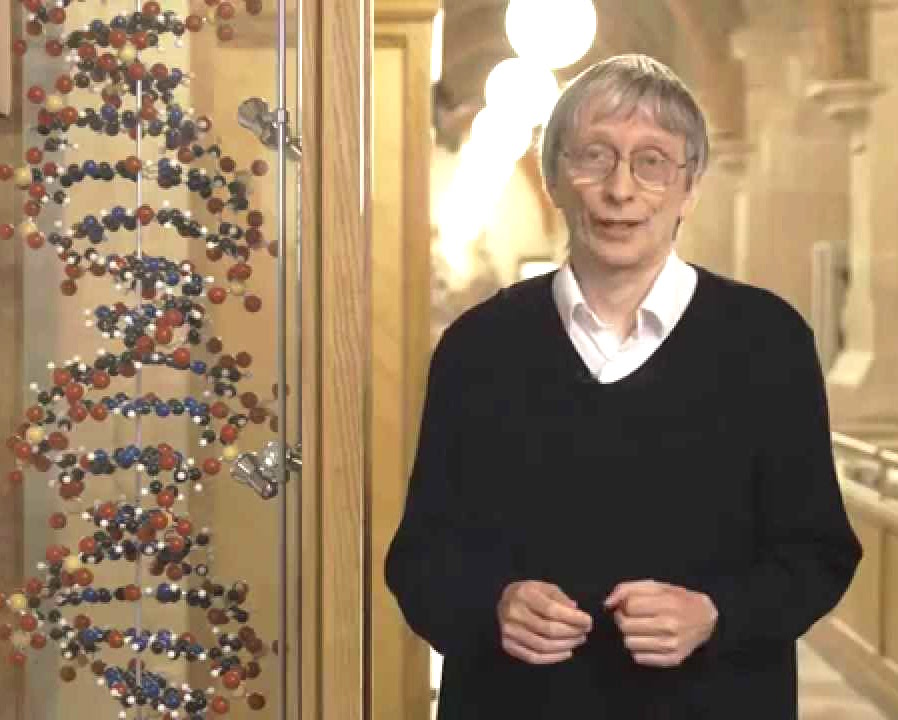
If anyone claims not to be surprised by the special features that the universe has, he is hiding his head in the sand. These special features are surprising and unlikely.

The Creator's pin had to find a tiny box, just 1 part in 1010123 of the entire phase-space volume, in order to start the universe off in the right way. I cannot help feeling that such precision could not be the result of chance.
Note carefully: Weinberg is an atheist. Davies describes himself as neither theist nor atheist. Deutsch is a secular Jew. Penrose is agnostic. These are not religious voices. They are among the most analytically rigorous scientists of their generation, and they all agree: fine-tuning is real, it is extreme, and it is not explained.
The Three Interpretations
Given the reality of fine-tuning, physicists and philosophers agree that only three explanations remain logically possible. Each must be evaluated on its merits.
The most common secular response is simply: we got lucky. Among an infinite space of possibilities, we happened to land in the one that permits life.
But consider what "chance" actually means here. A probability of 1 in 10120 — just for the cosmological constant — lies far beyond what statisticians and scientists call the "universal probability bound." This is the threshold below which an event is, for all practical purposes, impossible: roughly 1 in 1050. No scientist would accept such odds as meaningful evidence in any other field.
To say "it happened by chance" is not a scientific conclusion. It is an assertion that the laws of probability simply do not apply in this case — a position that requires extraordinary justification and offers none. Leonard Susskind, one of the architects of string theory, has acknowledged that the cosmological constant alone is sufficient to make chance an implausible position.
Perhaps the constants couldn't have been otherwise. Perhaps the laws of physics require these specific values, and no alternative universe is even possible.
This would be a satisfying answer — but physicists don't support it. There is no known physical principle that forces the cosmological constant to take its observed value, or that requires the strong nuclear force to sit within the 2% window that permits carbon. Nobel laureate Steven Weinberg explicitly corrected Richard Dawkins when Dawkins suggested Weinberg was arguing for necessity: he was not.
Without a mathematical proof that the constants must be what they are, the probability of any given universe being life-prohibiting vastly exceeds the probability of it being life-permitting. Necessity, as currently understood, explains nothing.
No one encounters a sophisticated machine — a spacecraft, a transistor, a piece of software — and concludes it assembled itself by chance. The hallmarks of design are precision, purpose, and complexity organized toward a goal. We recognise these features even when we don't observe the maker.
The fine-tuned universe exhibits all these features, at a scale that dwarfs any human engineering by factors impossible to express. The constants are not merely complex — they are specifically, precisely configured toward the single outcome of producing a universe that can sustain observers.
Since these are the only three interpretations available, and two of them fail on their own terms, the inference to design is not merely religious sentiment — it is the conclusion that remains standing after the alternatives have been eliminated.
The Multiverse: A Scientific Response?
The most popular contemporary alternative to a Creator is the multiverse hypothesis. The argument runs: if there are infinitely many universes, each with randomly different physical constants, then by chance alone some subset of them will be life-permitting — and we necessarily find ourselves in one of those. Our "winning" universe requires no explanation; it was statistically guaranteed to exist somewhere.
This is, logically, a coherent response. But it faces serious scientific and philosophical objections that have led some of its most capable defenders to express significant doubts.
-
It Is Not Science
The multiverse cannot be observed, tested, or falsified by any known or proposed experiment. Princeton cosmologist Paul Steinhardt — himself a prominent physicist — has called the multiverse a "fatal flaw" in modern cosmology: "The concept of the multiverse is bizarre, unnatural, untestable, and in the end dangerous for science and society." A hypothesis that explains everything by making no predictions is not a scientific conclusion. It is a metaphysical claim.
-
The Multiverse Generator Itself Requires Fine-Tuning
For a multiverse to produce an infinite range of universes with varying constants, some mechanism must exist — a meta-universe generator governed by its own laws and constants. Those laws and constants must themselves be precisely configured to produce the right range of outputs. Fine-tuning is not eliminated; it is pushed back one level. As Paul Davies argues: you cannot use the multiverse to explain fine-tuning if the multiverse itself is fine-tuned.
-
The Boltzmann Brain Problem
If the multiverse were true, the laws of probability would strongly predict that isolated, momentarily self-aware "Boltzmann Brains" — fluctuations of matter that spontaneously form a conscious observer — would be overwhelmingly more common than entire ordered universes. We should be floating brains, not inhabitants of a coherent cosmos. Since we observably are not, the multiverse theory fails to make correct predictions about what observers should find.
Nobel laureate Steven Weinberg — himself an atheist who would prefer a naturalistic explanation — conceded in his conversation with Richard Dawkins that, given the extreme fine-tuning of the cosmological constant, only two explanations remain: a benevolent Creator, or an infinite multiverse. He chose the latter — not on scientific grounds, but because the alternative was theologically inconvenient. That is an honest and revealing admission.
Scientists Whose Research Changed Them
The most compelling testimony comes not from theologians, but from researchers who began their careers as committed atheists — and found themselves compelled, by their own findings, to reconsider.
"When I began my career as a cosmologist twenty years ago, I was a convinced atheist. I never in my wildest dreams imagined that one day I would be writing a book purporting to show that the central claims of Judeo-Christian theology are in fact true, and that these claims are a straightforward deduction of the laws of physics as we now understand them. I have been forced into these conclusions by the inexorable logic of my own special branch of physics."
Tipler adds: "With the latest theories of physics, Christianity is no longer a mere religion but a science that can be investigated experimentally."

A common sense interpretation of the facts suggests that a super-intellect has monkeyed with physics, as well as with chemistry and biology, and that there are no blind forces worth speaking about in nature. The numbers one calculates from the facts seem to me so overwhelming as to put this conclusion almost beyond question.
Hoyle coined the term "Big Bang" as a dismissive label for a theory he rejected — he was a determined atheist who found the idea of a cosmic beginning theologically objectionable. Yet his discovery of the carbon-12 resonance, and the subsequent accumulation of fine-tuning evidence, shifted his worldview dramatically. By the end of his career, he acknowledged that an Intelligent Designer was the most rational inference from the physics he had spent his life studying.
Beyond these, Nobel laureate Arno Penzias — who co-discovered the cosmic microwave background radiation — has pointed to the fine-tuned universe as evidence for a Creator. Michio Kaku, a pioneer of string field theory, has written extensively about the mathematical elegance and order underlying the universe's structure — emphasising that the universe could have been chaotic and random, but is instead beautifully, precisely ordered in ways that inspire awe.
The Only Conclusion That Remains
Fine-tuning is not an argument from ignorance. It is not a "God of the gaps" claim. It is the observation that our best physics reveals a universe calibrated to extraordinary precision, by standards that dwarf anything human minds have constructed, for the purpose of producing observers — life capable of asking the question of why the universe is the way it is.
The three possible explanations — chance, necessity, design — have been examined by some of the most rigorous intellects in scientific history. Chance fails the probability test by margins too vast to express. Necessity has no known physical grounding. Design alone remains unrefuted.
The medieval theologians argued from the beauty of creation to the existence of a Creator. The physicists of the twentieth and twenty-first centuries have arrived at a parallel conclusion — not from beauty, but from mathematics. Not from faith, but from the numbers themselves.
As the Heavens have always declared the glory of God, the constants of physics declare it in a language that only became legible to us in the last century. The universe is not accidentally hospitable. It was made.
"The heavens declare the glory of God, and the sky above proclaims his handiwork. Day to day pours out speech, and night to night reveals knowledge."
Psalm 19:1–2
References & Further Reading
- Weinberg, S. (1987). "Anthropic bound on the cosmological constant." Physical Review Letters, 59(22), 2607.
- Penrose, R. (1989). The Emperor's New Mind. Oxford University Press.
- Barrow, J. D. & Tipler, F. J. (1986). The Anthropic Cosmological Principle. Oxford University Press.
- Hoyle, F., Dunbar, D. N. F., Wenzel, W. A., & Whaling, W. (1953). "A state in C12 predicted from astronomical evidence." Physical Review, 92(4), 1095.
- Collins, R. (2009). "The teleological argument: An exploration of the fine-tuning of the universe." In The Blackwell Companion to Natural Theology. Wiley-Blackwell.
- Rees, M. (1999). Just Six Numbers: The Deep Forces That Shape the Universe. Basic Books.
- Davies, P. (1982). The Accidental Universe. Cambridge University Press.
- Susskind, L. (2005). The Cosmic Landscape: String Theory and the Illusion of Intelligent Design. Little, Brown.
- Tipler, F. J. (2007). The Physics of Christianity. Doubleday.
- Steinhardt, P. J. (2011). "The inflation debate." Scientific American, 304(4), 36–43.
- Weinberg, S. & Dawkins, R. (2006). Discussion at the Salk Institute. [Video recording].
- Leslie, J. (1989). Universes. Routledge.